


 Apparel Boxes
 CBD Boxes
 Electronic Boxes
 Jewelry Boxes
 Christmas Boxes
 Soap Boxes
 Bottle Boxes
 Hardware Boxes
 Health Boxes
 Product Boxes
 Pharma Boxes
 Holiday Boxes
 Shipping Boxes
 Sports Boxes
 Pre Roll Boxes
 Pizza Boxes
 Vape Boxes
 Hemp Boxes
 Cereal Boxes
 Bakery Boxes
 Gift Boxes
 Stationery Boxes
 Chocolate Boxes
 Retail Boxes
 Candle Boxes
 Food Boxes
 Tea Packaging
 Cigarette Boxes
 Cosmetic Boxes
 Coffee Packaging
 Cardboard Boxes
 Corrugated Boxes
 Rigid Boxes
 Kraft Boxes
 Custom Tote Bag
 Custom Mylar Bags
 Hang Tags
 Labels & Stickers
 Mailer Boxes
 Paper Bags
 Trays and Sleeves
 Tube Packaging
 Tuck Boxes
 Display Boxes
 Window Packaging Boxes
 Gable Boxes
 Pillow Boxes


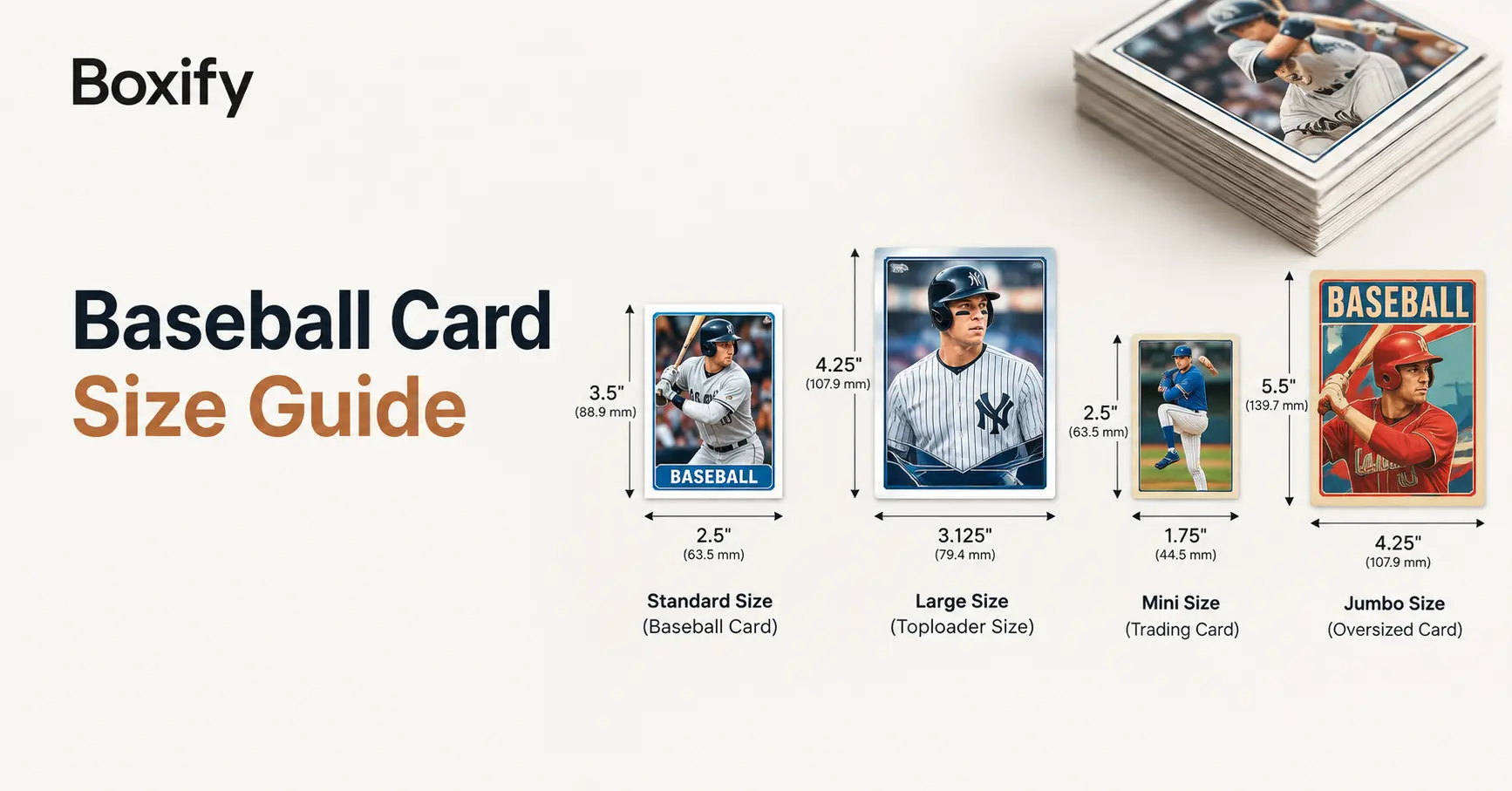
If you collect, trade, grade, or print baseball cards or other sports cards, size is not a small detail. A card that is even a little off from the standard dimensions can get flagged during grading, may not fit in sleeves or top loaders, and can look out of place next to a collection built around one consistent size. This guide breaks down the exact measurements, where they come from, and what to think about if you are printing or packaging cards of your own.
The Standard Size Explained
A regular baseball card measures 2.5 inches by 3.5 inches. This size has been the industry standard for decades, and it is the reason almost every piece of card storage on the market, sleeves, top loaders, binders, and magnetic cases, is built around it.
Sticking to this size matters for a few practical reasons. It fits existing storage without needing custom cases. It ships and stores easily since boxes and mailers are already sized for it. It also holds up better during grading, since major grading companies measure cards against this exact standard and flag anything that falls outside a small tolerance.
Baseball Card Dimensions in Every Unit
Here is the standard size converted into the units you are most likely to need, along with the two other common sizes seen in the hobby.
| Card type | Inches | Centimeters | Millimeters |
| Standard card | 2.5 x 3.5 | 6.35 x 8.89 | 63.5 x 88.9 |
| Oversized or jumbo card | 3 x 5 | 7.62 x 12.7 | 76.2 x 127 |
| Mini card | 1.5 x 2.5 | 3.81 x 6.35 | 38.1 x 63.5 |
If you are designing a card digitally, work at 750 by 1050 pixels for the standard size. That resolution keeps text and images sharp once the card gets printed at full scale.
Why Some Cards Do Not Follow the Standard
Not every card on the market sticks to 2.5 by 3.5 inches. Some producers print oversized cards for special editions or premium collector sets, since the larger surface gives more room for photography and foil detailing. Others go smaller with mini cards, often used for limited runs or promotional giveaways.
If you are printing your own set, there is nothing wrong with stepping outside the standard size. Just know that oversized or mini cards will need their own storage and packaging, since standard sleeves and cases will not fit them properly.
Material and Finish for a Card That Holds Up
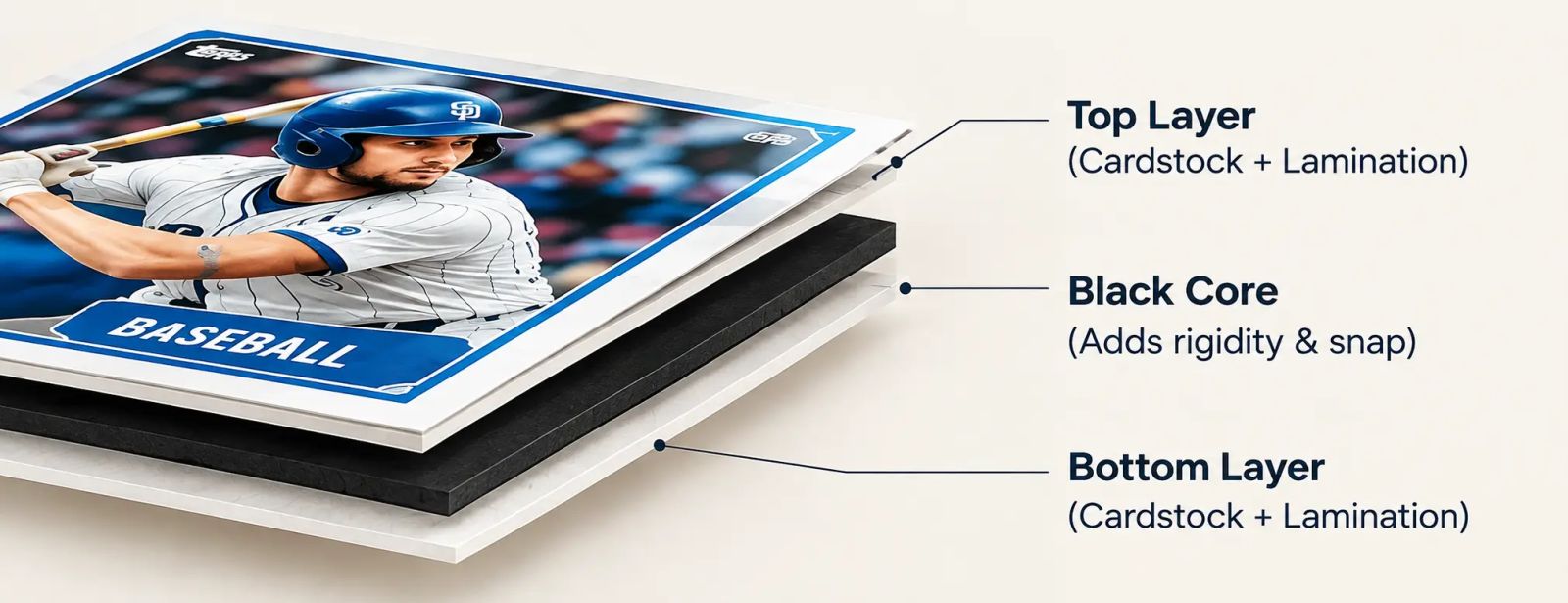
Most baseball cards are built from layered cardstock, often two sheets glued together with a black core between them, then finished with a lamination. This construction is what gives a card its snap and rigidity instead of feeling flimsy like a sheet of paper.
Thickness typically runs around 320 gsm for a card that feels substantial without being stiff. Finishing options like chrome lamination, foil accents, or spot gloss add a premium feel and make the card stand out in a stack, though a clean matte or gloss finish works fine for most sets.
Packaging That Protects Your Cards
Printing the cards is only half the job. How you box them decides whether they arrive at a buyer or collector in the same condition they left in.
Tuck boxes A simple, affordable option for a small set of cards. Tuck boxes close securely, stack well for storage, and give you a clean surface to print set details or artwork on.
Rigid boxes For a premium release or a limited edition set, a rigid box adds weight and structure that a folding carton cannot match. This is the choice most collectors associate with higher end releases.
Boxes with inserts A foam or cardboard insert keeps individual cards from sliding around inside the box during shipping. This matters most for graded cards or single high value cards being sold on their own.
Mailer boxes For cards shipped directly to buyers, a mailer box with a snug fit keeps corners from bending in transit, which is one of the most common ways a card loses grading value.
Tips for Designing Your Own Baseball Cards
Keep a small margin, at least an eighth of an inch, between your artwork and the card edge so nothing important gets trimmed during cutting. Use high resolution photos, since a blurry or pixelated image is one of the fastest ways a custom card looks unprofessional. If you are printing a full set, keep a consistent layout across every card so the back of the box and the cards themselves feel like one connected design.


