


 Apparel Boxes
 CBD Boxes
 Electronic Boxes
 Jewelry Boxes
 Christmas Boxes
 Soap Boxes
 Bottle Boxes
 Hardware Boxes
 Health Boxes
 Product Boxes
 Pharma Boxes
 Holiday Boxes
 Shipping Boxes
 Sports Boxes
 Pre Roll Boxes
 Pizza Boxes
 Vape Boxes
 Hemp Boxes
 Cereal Boxes
 Bakery Boxes
 Gift Boxes
 Stationery Boxes
 Chocolate Boxes
 Retail Boxes
 Candle Boxes
 Food Boxes
 Tea Packaging
 Cigarette Boxes
 Cosmetic Boxes
 Coffee Packaging
 Cardboard Boxes
 Corrugated Boxes
 Rigid Boxes
 Kraft Boxes
 Custom Tote Bag
 Custom Mylar Bags
 Hang Tags
 Labels & Stickers
 Mailer Boxes
 Paper Bags
 Trays and Sleeves
 Tube Packaging
 Tuck Boxes
 Display Boxes
 Window Packaging Boxes
 Gable Boxes
 Pillow Boxes


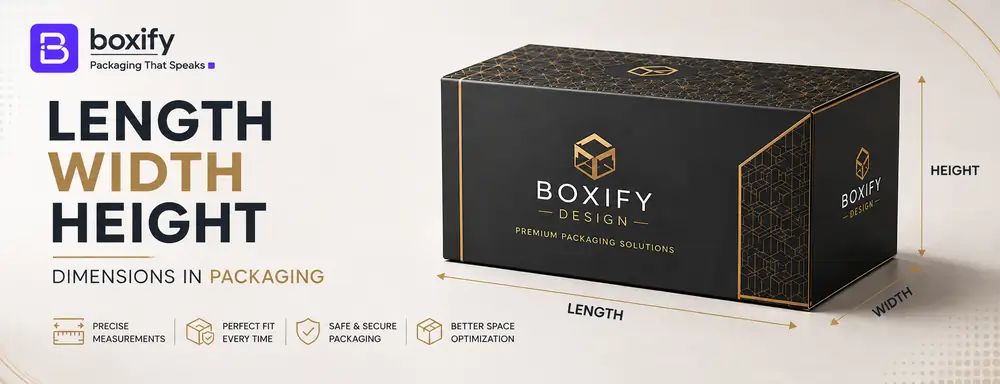
Have you ever ordered a custom box, shipped a package, or designed packaging for a business? If so, you've probably seen these three letters everywhere: L x W x H. These three numbers, length, width, and height are the foundation of the whole packaging world. They decide how a box is made, how much it costs to ship, how products get stored in a warehouse, and even how a customer feels when they open a package at their door.
Even though these numbers show up all the time, a lot of people, even business owners, don't really understand how to read them or use them the right way. In this guide, we'll explain what length, width, and height mean in packaging, why getting them right matters so much, and how to avoid the mistakes that lead to wasted money, damaged products, and unhappy customers.
What Do Length, Width, and Height Mean in Packaging?
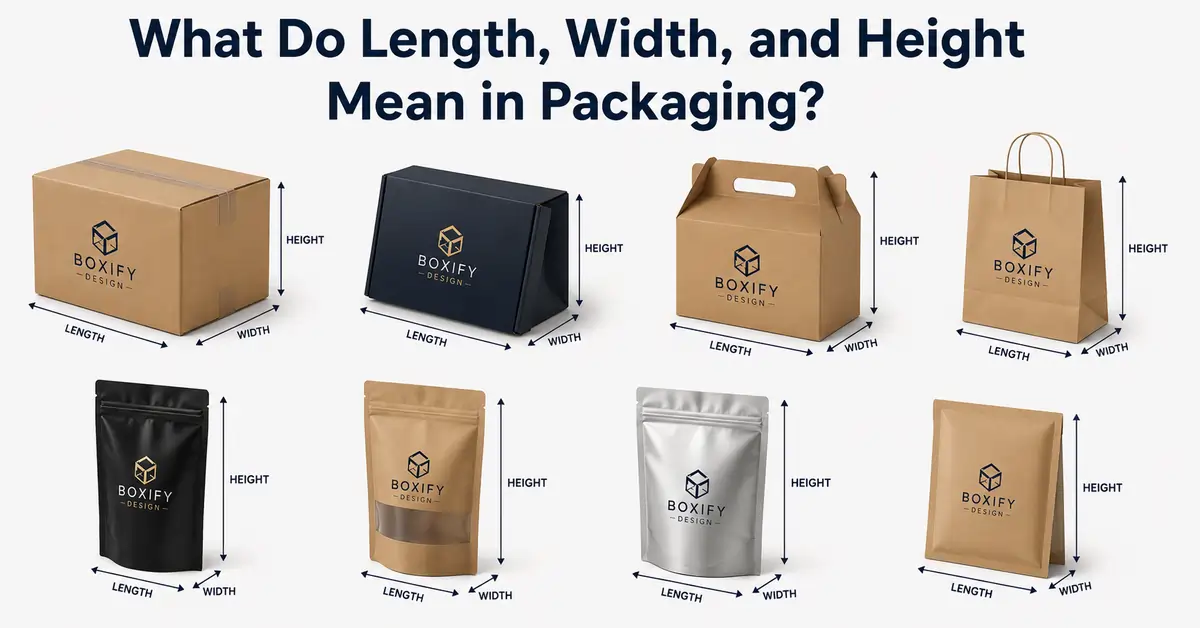
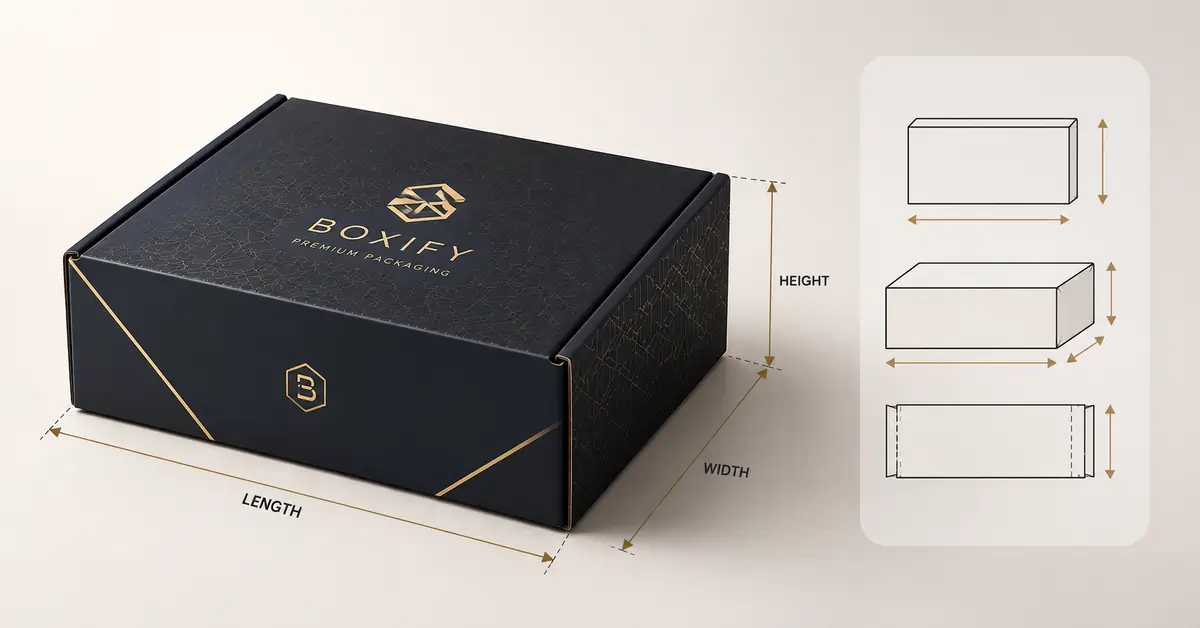
In the packaging world, every box, mailer, or container is described using three basic measurements:
- Length : the longest side of the box. On most shipping boxes, this is the side with the flap that opens.
- Width : the shorter side next to the length, usually the side panel of the box.
- Height : the up-and-down measurement, from the bottom of the box to the top, when it's standing up straight.
These numbers are almost always written in this order: Length x Width x Height (L x W x H). So a box labeled "16 x 12 x 10 inches" is 16 inches long, 12 inches wide, and 10 inches tall.
This order isn't random. It's a rule followed by shipping companies, box makers, and most online stores. Once you get used to this order, it becomes much easier to pick the right box size every time.
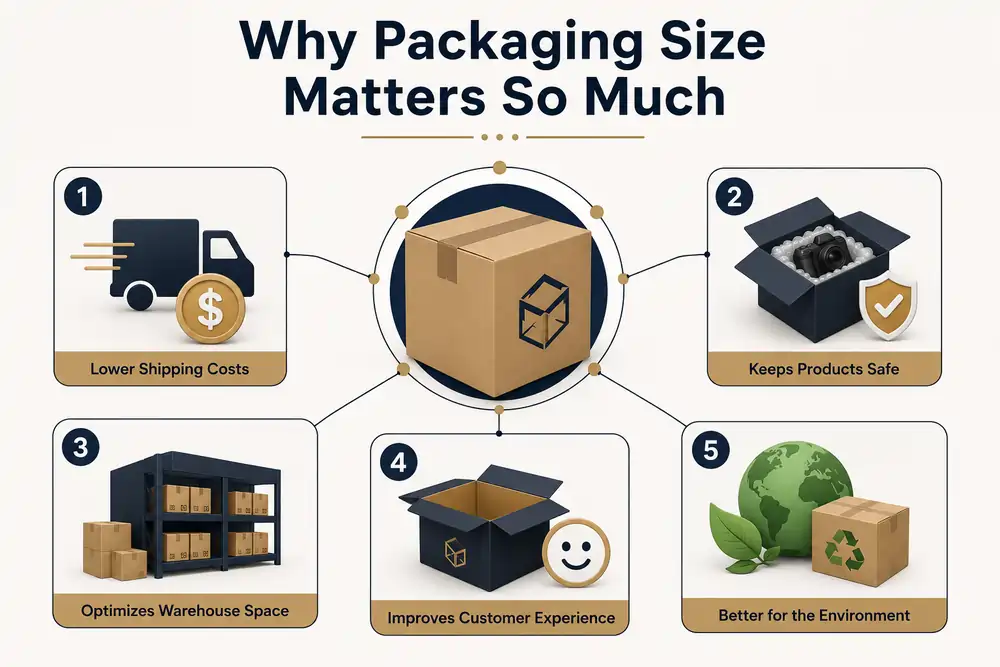
Why Packaging Size Matters So Much
It's easy to think box size is just a small, boring detail. But in real life, it affects almost every part of a business that ships products.
1. Shipping Costs
Shipping companies like UPS, FedEx, USPS, and DHL don't just charge based on weight. They also use something called dimensional weight. This means they look at the size of the box, not just how heavy it is. If the size makes the box seem "heavier" than its real weight, you get charged based on that bigger number.
This means a big box : even if it's mostly empty inside : can cost a lot more to ship than a smaller box holding the exact same product. If a business ships hundreds or thousands of orders, this extra cost can add up fast.
2. Keeping Products Safe
Box size also affects how well a product survives shipping. A box that's too big lets the product slide around inside, which can cause damage. A box that's too small can squeeze, bend, or crush the product. The right size : with just enough room for padding : keeps things safe without wasting space.
3. Warehouse Space
Warehouses depend on correct box sizes to plan their shelves, stacking, and storage. If a company guesses the size wrong, it throws off their planning, leading to wasted space or overcrowded shelves. When this happens across thousands of products, it can quietly cost a business a lot of money.
4. Customer Experience
Opening a package has become a real part of shopping today, especially online. A huge box with lots of empty air pillows or bubble wrap can feel wasteful and careless. But a box that fits the product nicely feels more thoughtful and professional, which can change how customers see a brand.
5. Helping the Environment
Oversized boxes don't just cost more money : they also create more waste. Extra cardboard and filler material add up to more trash and a bigger impact on the environment. That's why many businesses are now trying to use "right-sized" packaging : boxes that closely match the product, instead of boxes that are way too big.
How to Measure Packaging the Right Way
Getting your measurements right is the first step to good packaging. Here's how to do it, step by step.
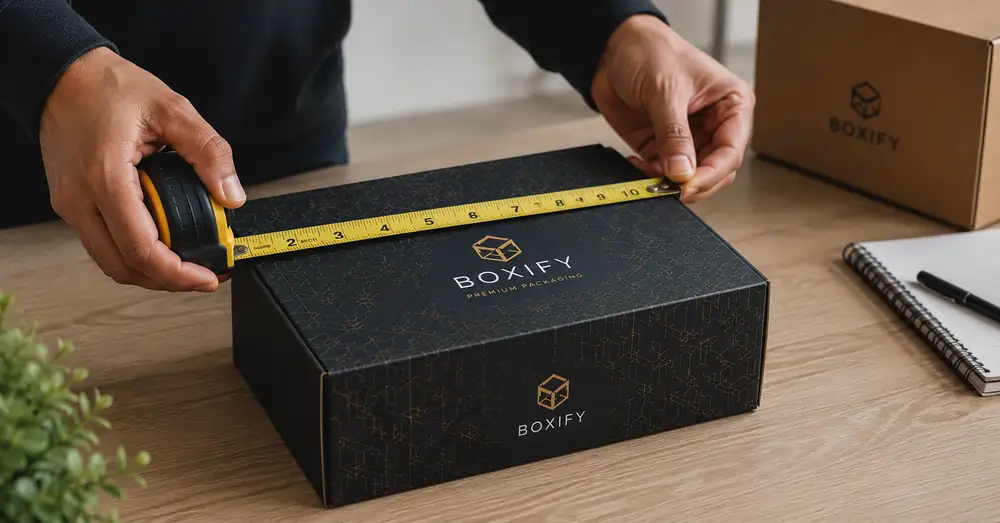
Step 1: Measure the Product First
Before picking a box, measure the actual product : its length, width, and height in its normal shape. If the product isn't a perfect rectangle, measure at its widest, longest, and tallest points.
Step 2: Add Extra Space for Padding
Once you know the product's size, add a little extra space on each side for protective material like bubble wrap, air pillows, or foam. A common rule is to add anywhere from half an inch to two inches per side, depending on how fragile the item is.
Step 3: Pick or Design the Box
Now that you know the padded size you need, you can choose a standard box close to that size, or work with a packaging company to create a custom box. Custom boxes fit tighter and waste less space, which can lower both shipping costs and material use.
Step 4: Check the Final Box Size
Once the product is packed, measure the whole box : not just the product : to get the final length, width, and height. This is the number shipping companies will use to calculate your cost, so it needs to be correct.
Step 5: Round Up, Not Down
Always round your final measurements up to the next whole number. If you guess too small, you might get the wrong shipping price or run into problems with the shipping company later.
How to Find the Volume of a Box
Once you know the length, width, and height of a box, you can find its volume with one simple formula:
Volume = Length x Width x Height
For example, a box that is 14 x 10 x 8 inches has a volume of:
14 x 10 x 8 = 1,120 cubic inches
This number is helpful for a few reasons:
- It tells you how much can fit inside the box.
- It helps you compare different box sizes to find the best fit.
- It helps figure out shipping costs based on size.
- It helps plan how many boxes will fit on a shelf or pallet.
For businesses shipping a lot of orders, knowing the volume also helps when comparing shipping plans or talking to carriers about pricing.
Mistakes Businesses Often Make with Packaging
Even careful sellers can make mistakes with box sizes. Here are the most common ones to watch for:
Using the same box for everything. One "go-to" box might seem easy, but if it's too big for small items, you're paying to ship empty air. Using a few different box sizes usually works out cheaper.
Forgetting space for padding. If you measure a product perfectly and order a box that fits exactly, there's no room left for bubble wrap or padding : which makes damage more likely.
Mixing up width and depth. This happens a lot with flat or wide products. Always double-check which side is which before ordering boxes in bulk.
Ignoring shipping company size limits. Carriers often have maximum size rules. If a box is too big, you might get charged extra fees, or the package might even get rejected. Always check the current rules before finalizing your packaging.
Not thinking about odd shapes. Products with handles, curves, or parts that stick out need extra care when measuring, since the widest point matters more than the average shape of the item.
Choosing the Right Packaging Plan for Your Business
Different products need different packaging plans. Here are a few common approaches businesses use:
Standard Sizing: Using just a few box sizes : small, medium, and large : for most products. This is simple, but it can waste some space for products that don't fit neatly into one size.
Custom-Fit Packaging: Making boxes that are designed specifically for one product or product line. This wastes less space and saves on shipping but takes more planning and setup.
Adjustable or Foldable Packaging: Some businesses use boxes that can change size or fold differently depending on the order. This gives flexibility without needing to stock dozens of box sizes.
Mailers and Poly Bags for Light Items: For soft or flexible products, padded mailers or bags often work better than hard boxes, since they hug the product's real shape closely and don't waste extra space.
Picking the right plan usually comes down to balancing cost, protection, and how much your products vary in size.
Why Correct Packaging Size Helps with Online Sales Too
For online sellers, correct packaging and product sizes aren't just useful for the warehouse team, they also matter for how products show up online. Shopping websites and search engines often use size information to match what customers are searching for. Listings with clear, correct measurements tend to show up better in search results, get fewer returns, and earn more trust from shoppers who want to know exactly what they're buying.
On top of that, showing correct packaging size during checkout helps customers expect the right shipping cost, which can stop them from leaving their cart at the last step just because the shipping fee surprised them.
A Few Real Examples
Let's look at a few simple, everyday examples.
Example 1: Shipping a T-Shirt A folded t-shirt might measure about 12 x 8 x 1 inches. Since it's thin and soft, a padded mailer usually makes more sense than a hard box. It hugs the shirt closely and doesn't waste extra space, which would otherwise raise the shipping cost.
Example 2: Shipping a Coffee Mug A ceramic mug on its own might be 4 x 4 x 4 inches. But once you add bubble wrap and a protective box, the final size might grow to 6 x 6 x 6 inches. That extra two inches on each side is there to stop the mug from breaking : and it's worth the slightly higher shipping cost compared to dealing with a broken item and a return.
Example 3: Shipping a Small Speaker A small speaker that's 6 x 4 x 3 inches might need a box closer to 9 x 7 x 6 inches once you add foam padding and corner protectors. Trying to save space by skipping this padding often backfires, since electronics break easily if they move around during shipping.
These examples show one simple idea: packaging size isn't just about the product : it's about the product plus the protection it needs to arrive safely.
Final Thoughts
Length, width, and height might sound like small, boring numbers. But in packaging, they affect almost everything : shipping costs, product safety, warehouse space, customer experience, and even how much waste a business creates. Taking a little extra time to measure correctly, pick the right box size, and avoid common mistakes can save real money while giving customers a better experience every time a package arrives.
Whether your business ships a handful of orders a week or thousands of products a month, getting comfortable with length, width, and height is one of the easiest ways to run a smarter, more cost-friendly shipping process.


