Apparel Boxes
 CBD Boxes
 Electronic Boxes
 Jewelry Boxes
 Christmas Boxes
 Soap Boxes
 Bottle Boxes
 Hardware Boxes
 Health Boxes
 Product Boxes
 Pharma Boxes
 Holiday Boxes
 Shipping Boxes
 Pre Roll Boxes
 Pizza Boxes
 Vape Boxes
 Hemp Boxes
 Cereal Boxes
 Bakery Boxes
 Stationery Boxes
 Sports Boxes
 Chocolate Boxes
 Retail Boxes
 Gift Boxes
 Candle Boxes
 Food Boxes
 Tea Packaging
 Cigarette Boxes
 Cosmetic Boxes
 Coffee Packaging
 Cardboard Boxes
 Corrugated Boxes
 Rigid Boxes
 Kraft Boxes
 Custom Tote Bag
 Custom Mylar Bags
 Gable Boxes
 Hang Tags
 Labels & Stickers
 Mailer Boxes
 Paper Bags
 Pillow Boxes
 Trays and Sleeves
 Tube Packaging
 Tuck Boxes
 Window Packaging Boxes
 Display Boxes


If you cook, shop for imported goods, or have ever bought jewelry, you've probably run into this conversion at some point. Grams and ounces come from two different measurement systems, and once the basic math clicks, switching between them stops being a hassle.
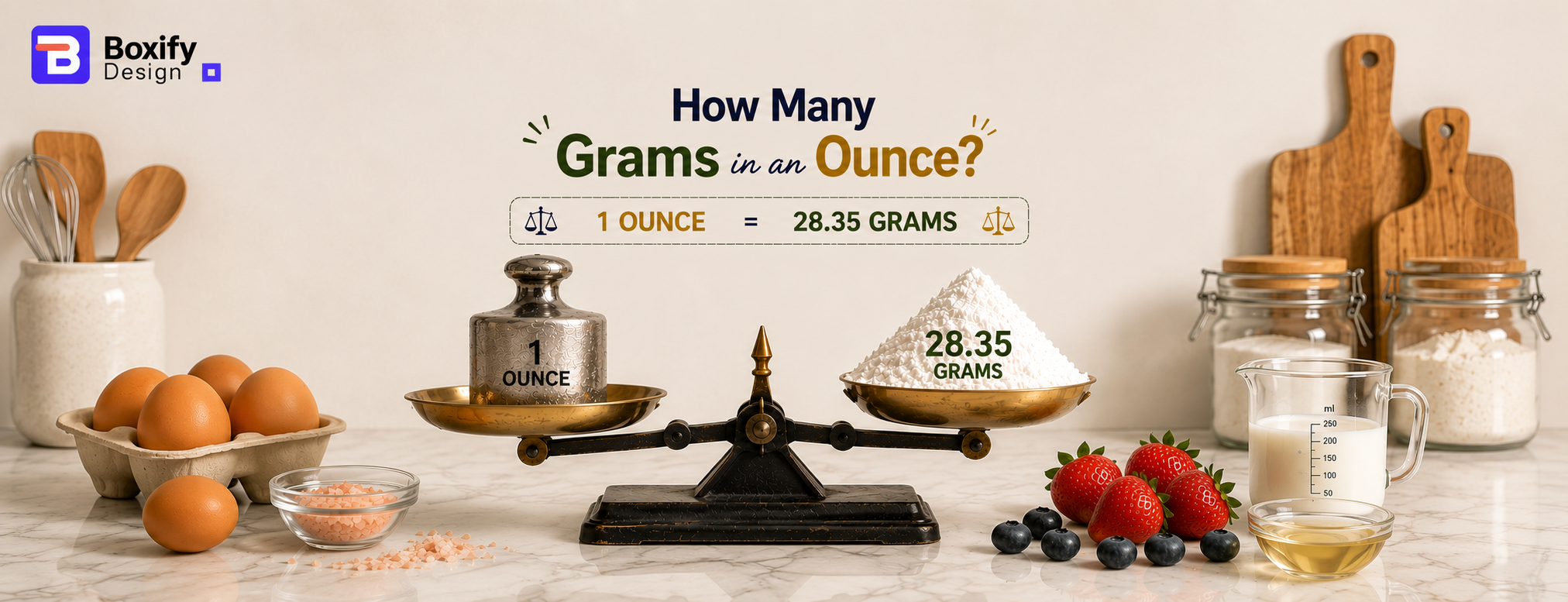
The short version: one ounce is 28.3495 grams. In practice, almost everyone rounds that to 28.35, and plenty of people just use 28 for a quick mental estimate. That's fine for cooking. It's not fine if you're weighing gold or working somewhere precision actually matters, like a lab or a pharmacy.
Why This Conversion Keeps Coming Up
Grams are part of the metric system, which most of the world uses. Ounces come from the imperial system, and outside of a handful of countries, that basically means the United States. Recipes, product labels, and shipping paperwork all get written in whatever system the country of origin happens to use, so this conversion comes up more than you'd expect. Someone baking from a European cookbook needs to turn grams into ounces, or just buy a scale that reads both. Someone comparing an imported snack's net weight to a local one is doing the same thing in reverse.
The Formula
Ounces to grams: multiply by 28.3495.
Grams to ounces: divide by 28.3495, or multiply by 0.035274 if you'd rather avoid division.
Say you've got 6 ounces of something and need grams: 6 times 28.3495 comes out to about 170.1 grams. Going the other direction, 200 grams divided by 28.3495 lands at roughly 7.05 ounces.
Ounces to Grams Chart
| Ounces (oz) | Grams (g) |
|---|---|
| 1/8 oz | 3.54 g |
| 1/4 oz | 7.09 g |
| 1/2 oz | 14.17 g |
| 3/4 oz | 21.26 g |
| 1 oz | 28.35 g |
| 2 oz | 56.70 g |
| 4 oz | 113.40 g |
| 8 oz | 226.80 g |
| 16 oz (1 lb) | 453.59 g |
Grams to Ounces Chart
| Grams (g) | Ounces (oz) |
|---|---|
| 5 g | 0.18 oz |
| 10 g | 0.35 oz |
| 15 g | 0.53 oz |
| 25 g | 0.88 oz |
| 50 g | 1.76 oz |
| 100 g | 3.53 oz |
| 250 g | 8.82 oz |
| 500 g | 17.64 oz |
| 1000 g (1 kg) | 35.27 oz |
Grams vs Ounces: What Actually Separates Them
.jpg)
A gram and an ounce both measure weight, but they didn't grow up in the same system. Grams belong to the metric world, so they're smaller and scale cleanly, which is exactly why chemists, pharmacists, and serious bakers reach for them. An ounce is bigger and comes out of the imperial system that the US never fully let go of. It works fine for everyday cooking and retail, just at a coarser resolution.
None of that makes one unit "better," they're just calibrated differently. Grams give you finer control because you need about 28 of them to equal a single ounce. That said, there's one place this gets genuinely confusing: gold and silver aren't weighed in a regular ounce at all. They use a troy ounce, which comes out to 31.1035 grams, noticeably heavier than the ounce you'd use for flour or sugar.
Where People Usually Trip Up
The biggest mistake is treating a troy ounce and a regular ounce as interchangeable. They're not. A troy ounce, reserved for precious metals, weighs about 10 percent more than the avoirdupois ounce used for food, shipping, or body weight. Mix them up when pricing gold and the math will be off by more than a rounding error.
The other trap is fluid ounces. A fluid ounce measures volume, not weight, so it's a different kind of measurement entirely. For water, it happens to work out close enough, since a fluid ounce of water weighs about 28.35 grams. But swap in honey, oil, or flour and that overlap disappears, because those substances aren't the same density as water. If a recipe gives you grams, a scale will get you there far more reliably than a measuring cup.
Avoirdupois Ounce vs Troy Ounce
| Usage | Avoirdupois Ounce | Troy Ounce |
|---|---|---|
| Used for | Food, body weight, packages, shipping | Gold, silver, platinum |
| Grams | 28.3495 g | 31.1035 g |
| Common use | Everyday cooking and retail | Precious metals pricing |
Gold & Silver Ounce Conversion
| Troy Ounces | Grams |
|---|---|
| 1/4 troy oz | 7.78 g |
| 1/2 troy oz | 15.55 g |
| 1 troy oz | 31.10 g |
| 10 troy oz | 311.03 g |
Fractional Ounces Breakdown
| Fraction | Ounces | Grams |
|---|---|---|
| An eighth | 0.125 oz | 3.54 g |
| A quarter | 0.25 oz | 7.09 g |
| A half | 0.5 oz | 14.17 g |
| Three-quarters | 0.75 oz | 21.26 g |
| A full ounce | 1 oz | 28.35 g |
How to Actually Convert This Stuff
The easiest fix is a digital kitchen scale that toggles between grams and ounces. Set the container on it, hit tare so it zeros out, add your ingredient, and read whichever unit you need. No math required.
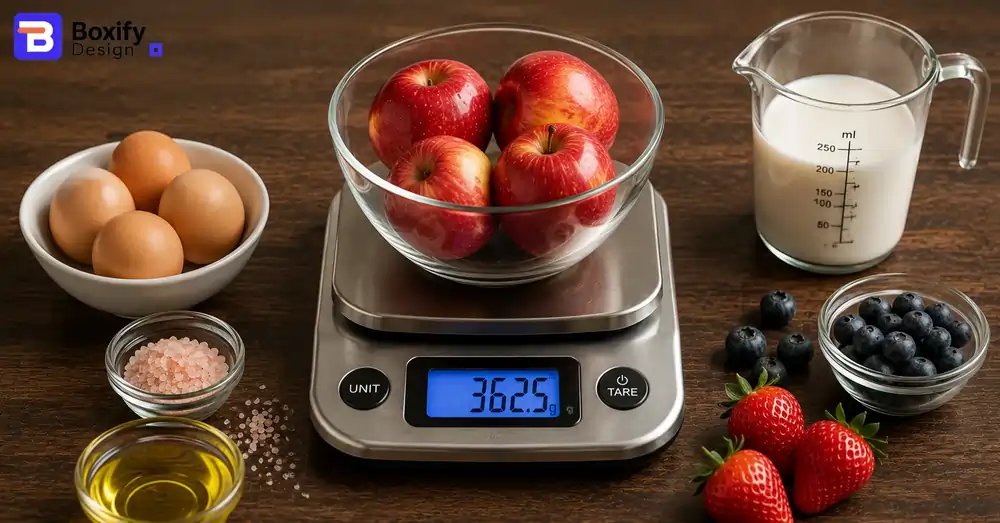
No scale handy? The formula still works by hand: ounces times 28.35 for grams, or grams divided by 28.35 for ounces. If you just need a ballpark and don't feel like reaching for a calculator, dividing by 28 instead of 28.35 gets close enough for most kitchen purposes.
It also helps to just remember a few numbers instead of recalculating every time. Half an ounce sits around 14.17 grams. A quarter ounce is about 7.09 grams. A full pound, at sixteen ounces, works out to roughly 453.6 grams. Keep those in your head and you can estimate almost anything else on the fly.
Bottom Line
Grams and ounces measure the same thing, weight, just through two different systems. The core conversion, 1 ounce to 28.3495 grams, covers almost everything you'll run into day to day, whether that's cooking or comparing product labels. The two situations worth remembering as exceptions are precious metals, which use the heavier troy ounce, and liquids, where volume and weight aren't automatically the same thing. Once the formula and a couple of reference points are stuck in your head, converting between the two takes about as long as reading this sentence.