Apparel Boxes
 CBD Boxes
 Electronic Boxes
 Jewelry Boxes
 Christmas Boxes
 Soap Boxes
 Bottle Boxes
 Hardware Boxes
 Health Boxes
 Product Boxes
 Pharma Boxes
 Holiday Boxes
 Shipping Boxes
 Pre Roll Boxes
 Pizza Boxes
 Vape Boxes
 Hemp Boxes
 Cereal Boxes
 Bakery Boxes
 Stationery Boxes
 Sports Boxes
 Chocolate Boxes
 Retail Boxes
 Gift Boxes
 Candle Boxes
 Food Boxes
 Tea Packaging
 Cigarette Boxes
 Cosmetic Boxes
 Coffee Packaging
 Cardboard Boxes
 Corrugated Boxes
 Rigid Boxes
 Kraft Boxes
 Custom Tote Bag
 Custom Mylar Bags
 Gable Boxes
 Hang Tags
 Labels & Stickers
 Mailer Boxes
 Paper Bags
 Pillow Boxes
 Trays and Sleeves
 Tube Packaging
 Tuck Boxes
 Window Packaging Boxes
 Display Boxes


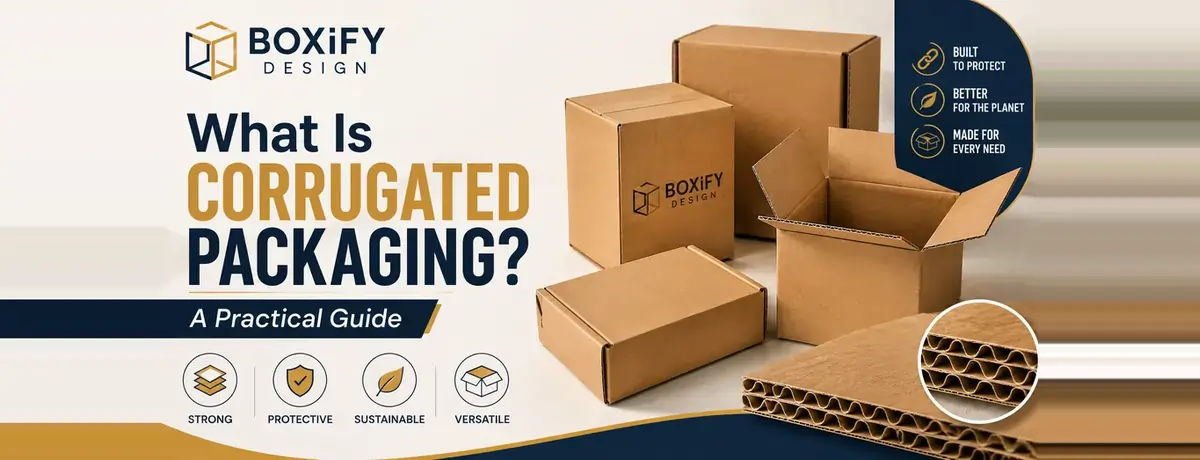
Chances are, the last box that showed up on your doorstep was corrugated. It's the stuff behind most shipping boxes, retail cartons, and product inserts you run into, and it's held that spot for over a hundred years for a pretty simple reason: it's strong without being heavy, it's cheap to make, and you can customize it however you need. So let's get into what it actually is, how it's put together, and whether it's the right call for whatever you're trying to package.
What Corrugated Packaging Actually Is
At its core, corrugated packaging comes from corrugated fiberboard — three layers stacked together. You've got two flat sheets of linerboard on the outside, and squeezed between them, a wavy fluted layer of paper. That middle layer is doing most of the work. Picture a row of tiny arches: that's basically what the flute is, and it's why the board can take a hit or resist getting crushed in a way a flat sheet of the same paper never could.
This is usually where people start mixing up two words that get used interchangeably but really shouldn't be. Cardboard, in everyday speech, is that thick single-layer paperboard you'd find on a cereal box. Corrugated board is the three-layer fluted setup used for shipping. People say "cardboard box" all the time when they mean corrugated, but structurally they're not close — and that gap is exactly why corrugated survives shipping in a way plain cardboard just doesn't.
Flute Types: The Detail Most Guides Skip
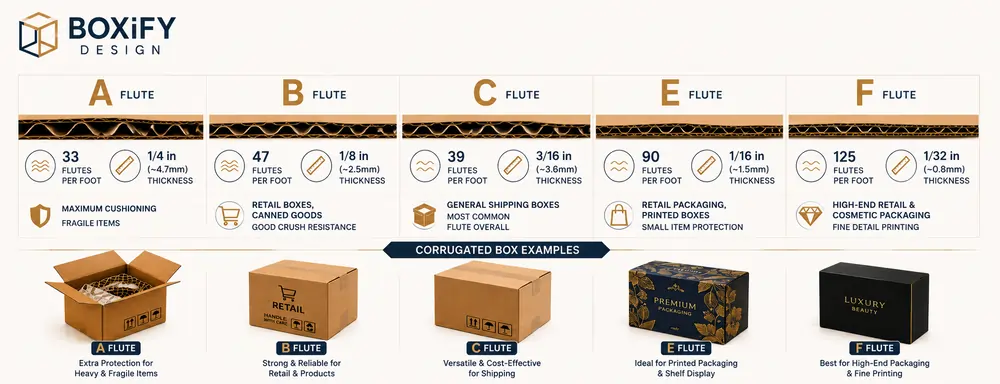
The flute — that wavy middle layer — comes in different sizes, and the size changes what the board is good at. Bigger flutes cushion more; smaller flutes hold fine print detail and take up less room. Most corrugated packaging you'll come across sticks to one of five standard flute sizes.
|
Flute Type |
Flutes per Foot |
Thickness |
Best For |
|
A Flute |
33 |
1/4 in (~4.7mm) |
Maximum cushioning, fragile items |
|
B Flute |
47 |
1/8 in (~2.5mm) |
Retail boxes, canned goods, good crush resistance |
|
C Flute |
39 |
3/16 in (~3.6mm) |
General shipping boxes, most common flute overall |
|
E Flute |
90 |
1/16 in (~1.5mm) |
Retail packaging, printed boxes, small item protection |
|
F Flute |
125 |
1/32 in (~0.8mm) |
High-end retail and cosmetic packaging, fine detail printing |
Single Wall, Double Wall, and Triple Wall
On top of flute size, corrugated board also comes in different wall builds — really just how many fluted layers get stacked on top of each other.
|
Wall Type |
Structure |
Typical Use |
|
Single wall |
One fluted layer between two liners |
Standard shipping boxes, retail packaging, most eCommerce orders |
|
Double wall |
Two fluted layers, three liners |
Heavier products, export shipping, stacked storage |
|
Triple wall |
Three fluted layers, four liners |
Industrial equipment, bulk shipments, extremely heavy loads |
How Strong Is Corrugated, Really?
Two numbers actually matter here, and neither one shows up in most general packaging guides. Edge Crush Test, or ECT, measures how much force the edge of the board can take before it crushes — it's the main clue to how well a box handles stacking. A standard shipping box usually carries an ECT rating around 32, which just means it can hold a reasonable stack without buckling. Then there's burst strength, sometimes called Mullen strength, which measures how much pressure the board can absorb before it punctures. Heavier or sharper products call for a higher burst rating; lighter, more uniform products can usually get by with less. Honestly, knowing these two numbers will do more for your packaging decision than knowing the flute type ever will.
Does Your Product Actually Need Corrugated Packaging?
Corrugated isn't automatically the right answer for everything. It tends to make sense when a few of these apply:
- The product has to survive being shipped, stacked, or handled more than once before it reaches the customer
- There's weight or fragility involved — glass, electronics, anything with sharp edges
- Branding and print quality matter, since corrugated takes offset, flexographic, and digital printing well
- Cost matters at scale, since corrugated runs cheaper per unit than most rigid or plastic options
On the flip side, small, lightweight items that don't need stacking strength — cosmetics sitting in a retail display, say — often do better in a rigid box or plain paperboard instead, where the unboxing moment and print detail matter more than crush resistance.
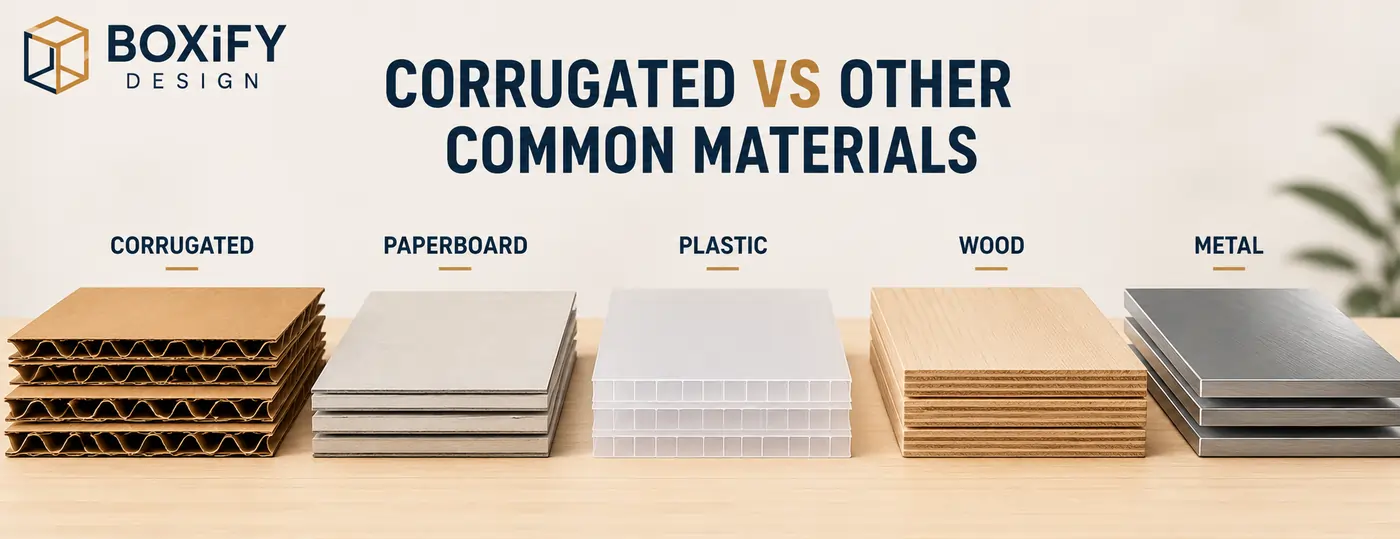
Corrugated vs Other Common Materials
|
Material |
Strength |
Cost |
Best Fit |
|
Corrugated fiberboard |
High (scales with flute/wall type) |
Low to moderate |
Shipping, eCommerce, general retail |
|
Rigid board |
Moderate, non-flexing |
Moderate to high |
Premium retail, gift boxes |
|
Plastic packaging |
High, but less sustainable |
Moderate |
Products needing moisture or airtight seals |
|
Standard paperboard |
Low to moderate |
Low |
Lightweight retail boxes, cartons |
Why It's Stuck Around This Long
Corrugated packaging isn't new, and it's not flashy, but it keeps winning because it hits a combination almost nothing else does: strength, low weight, low cost, and full recyclability, all at once. Most of it starts as recycled paper fiber, and it goes right back into the recycling stream once you're done with it — and because of how the flute is built, you get real protection without hauling around a bunch of extra weight. Whether you're shipping standard cartons or ordering custom boxes built around a specific product, that mix of strength, weight, and cost is genuinely hard to beat for most businesses moving physical goods.