(312) 681 7194


 Apparel Boxes
 CBD Boxes
 Electronic Boxes
 Jewelry Boxes
 Christmas Boxes
 Soap Boxes
 Bottle Boxes
 Hardware Boxes
 Health Boxes
 Product Boxes
 Pharma Boxes
 Holiday Boxes
 Shipping Boxes
 Sports Boxes
 Pre Roll Boxes
 Pizza Boxes
 Vape Boxes
 Hemp Boxes
 Cereal Boxes
 Bakery Boxes
 Gift Boxes
 Stationery Boxes
 Chocolate Boxes
 Retail Boxes
 Candle Boxes
 Food Boxes
 Tea Packaging
 Cigarette Boxes
 Cosmetic Boxes
 Coffee Packaging
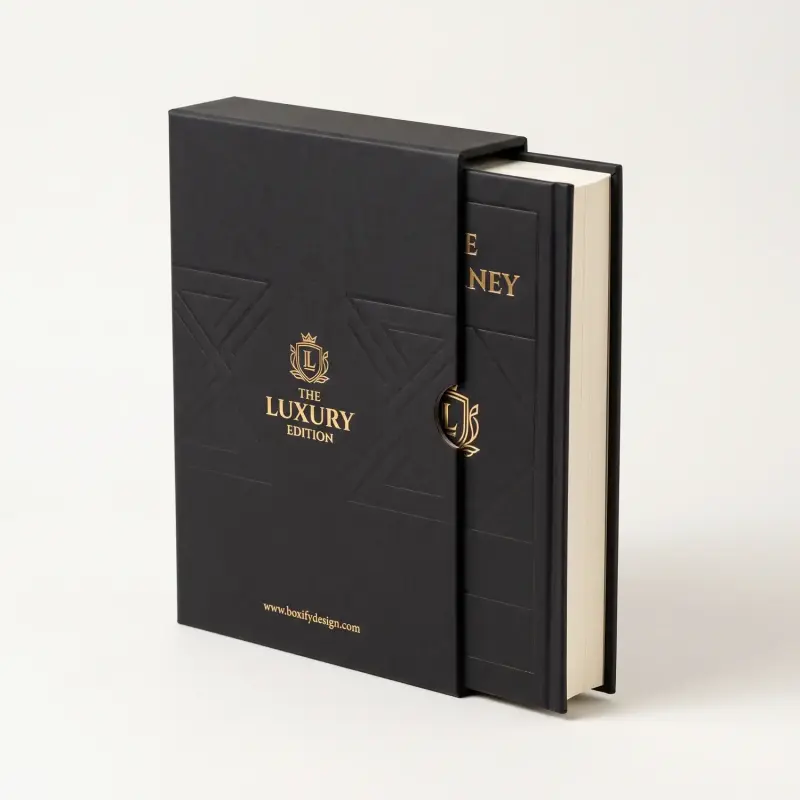
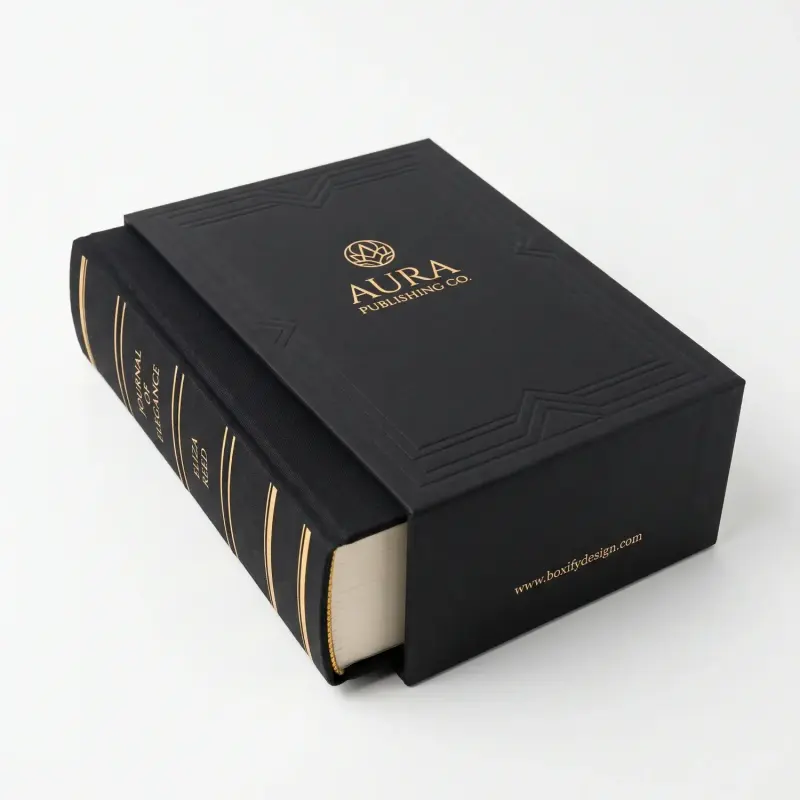
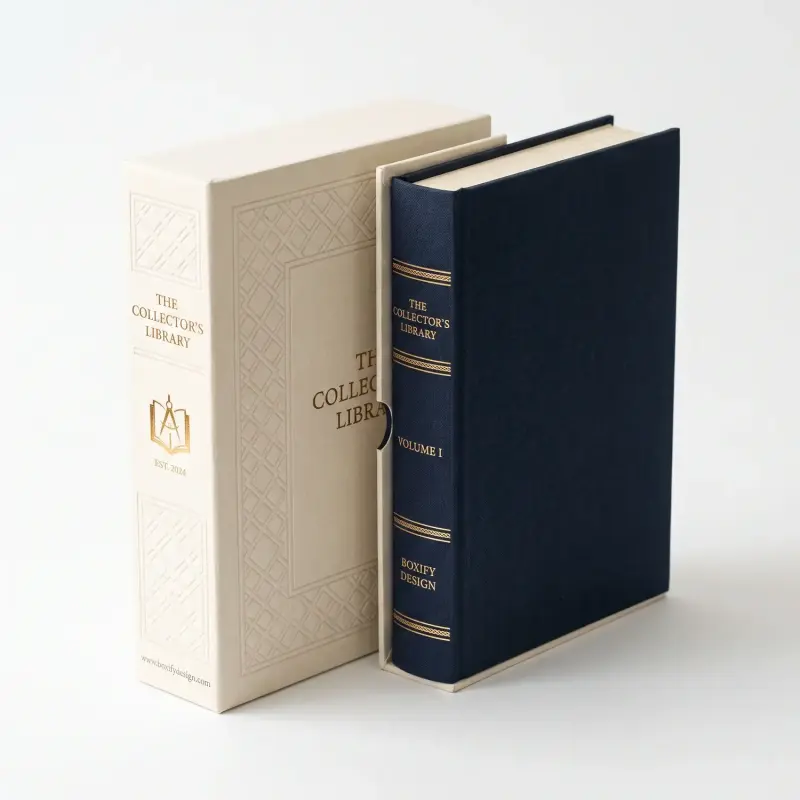
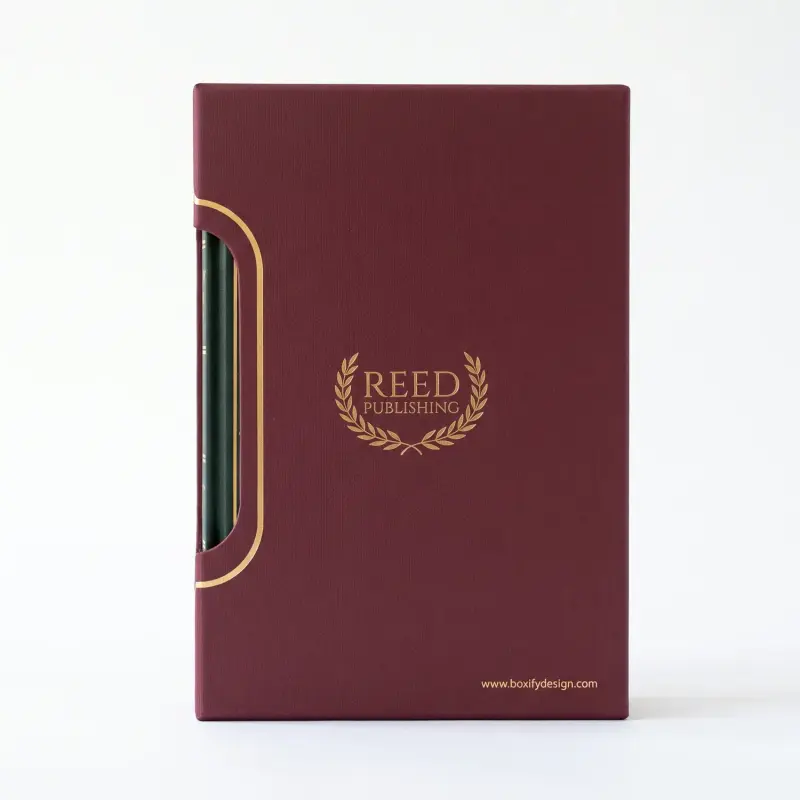
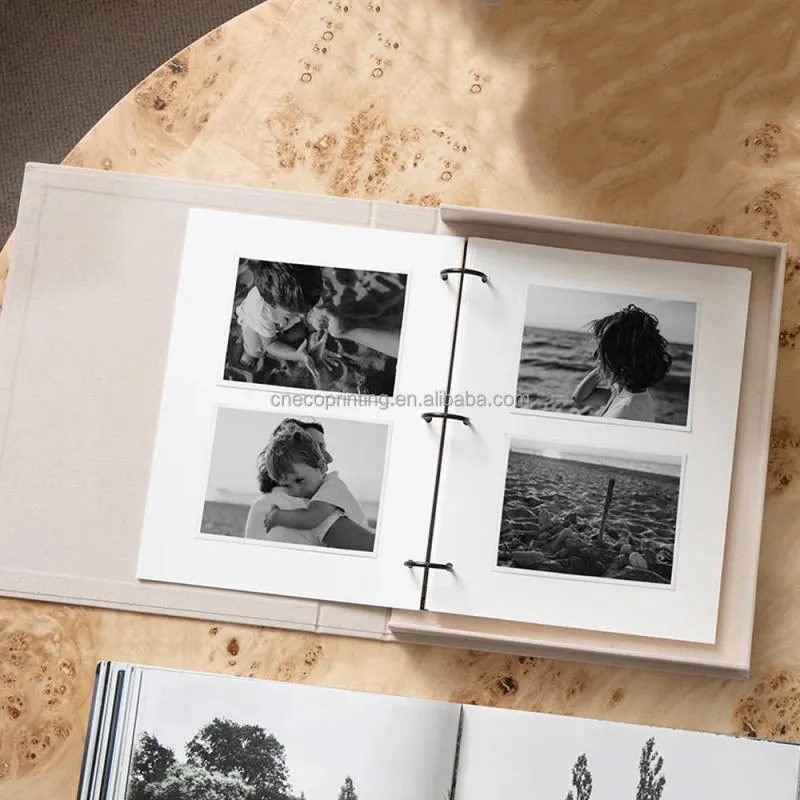
Custom book slipcases manage to bring together protection and presentation in a way plain packaging just can't match. They end up being the first thing a reader notices, even before the book itself. Customizing them isn'...

UK
 4.5
4.5
Date of experience
15 Oct, 2025
New York
5
Date of experience
15 Oct, 2025
New York
4.5
Date of experience
15 Oct, 2025
 No Minimum Order
 Free Custom Designing
 Best and Competitive Pricing
 No Die or Plate Charges
 7 Day Turnaround
 Free Shipping All Over USA
Think about the last time you picked up a boxed book set. Chances are the packaging is half the reason you remember it. A slipcase isn't just there to stop corners from getting dinged during shipping, though it does that well. It's also the first thing a reader touches, and first impressions tend to stick.
Publishers, self-published authors, art galleries, and even museum gift shops use slipcases for this exact reason. It turns a book into something closer to a keepsake.
Picking the right material comes down to what the book needs and how it's going to travel. Here's what we stock:
The workhorse material. Sturdy, affordable, and holds its shape well under normal handling.
Denser and stronger than chipboard. This is the go to pick for heavier books or ones that need to survive rougher shipping.
For poetry collections, art books, or anything where the outside needs to feel as good as the inside reads.
An eco-friendly option for brands that want a natural, sustainable look without giving up structure.
| Board Type | Thickness (mm) | Thickness (pt) | Best For |
| Chipboard (Light) | 1.5mm - 2mm | 60pt - 80pt | Standard paperbacks and trade editions |
| Chipboard (Heavy) | 2.5mm - 3mm | 100pt - 120pt | Hardcovers and multi-book box sets |
| Greyboard | 1mm - 4mm | 40pt - 160pt | Rare editions, museum and archival use |
| Kraft Rigid Board | 1.5mm - 2.5mm | 60pt - 100pt | Sustainable, natural-look packaging |
Not every book calls for the same slipcase. Here's a rundown of the styles we build most often:
Offset printing is the pick for bulk runs. It costs less per unit once you're printing in volume, which makes it the standard choice for large publishers.
Digital printing skips the setup time. If you need a short run fast, or you're printing a limited edition, this is usually the better call. The tradeoff is a slightly higher cost per unit.
Screen printing works best on flat surfaces and gives a raw, tactile look. It's slower and less precise than the other two, but some brands want exactly that.
CMYK blends four base colors to create your design. It's reliable, but you might notice slight shifts in shade depending on the material or press run.
Pantone locks in an exact shade with its own code, so the color stays consistent no matter what machine or stock is used. If brand color accuracy is non-negotiable for you, Pantone is worth the extra step.
| Finish | Description |
| Matte Lamination | A soft, non-reflective look with quiet elegance |
| Glossy Lamination | A bright, reflective shine that makes colors stand out |
| Soft Touch Lamination | A velvet-like texture that adds a tactile luxury feel |
| Spot UV | Glossy accents layered over specific design areas |
| Foil Stamping | Adds a metallic shine to logos, text, or design elements |
| Embossing & Debossing | Raises or presses the design into the material for texture |
Reach out and we'll walk you through material, style, and finish options based on what your book actually needs. Free design support and a free 3D mockup come standard with every order, and shipping is on us. Contact Boxify Design at inquiries@boxifydesign.com or call (312) 681-7194 to get started.
| Product Style | Custom Book Slipcases |
| Dimension (L + W + H) | All Custom Sizes and Shapes |
| Quantities | 100 MOQ |
| Stock | 10pt to 28pt (60lb to 400lb) Eco-Friendly Kraft, E-flute Corrugated, Bux Board, Cardstock |
| Printing | Offest , Digital , Screen |
| Included Options | Die Cutting, Gluing, Scored,Perforation |
| Proof | Flat View, 3D Mock-up, Physical Sampling (On request) |
| Turnaround | 12 - 15 Business Days, |
| Shipping | Flat / Volumetric |

Foil stamping, sometimes called foil printing, is a method of applying colored foils to a surface for an elegant look.

The term "kraft" is German for "strength," reflecting the material's durability, which makes it ideal for shipping and protecting products, especially when used in its naturally brown or white forms.

Rigid stock is a premium, sturdy material used for custom boxes, created by combining a dense paperboard core (chipboard) with a smooth, high-quality paper or cardstock covering.

Corrugated is a strong, layered material composed of a wavy, inner fluted sheet sandwiched between two flat outer linerboards.

Foil stamping, sometimes called foil printing, is a method of applying colored foils to a surface for an elegant look. Much like embossing, foil stamping uses a combination of heat and pressure to stick foil to a printed substrate.

Spot UV is a method of applying a glossy, ultra-smooth finish to targeted areas of printed materials.

A glossy finish is a smooth, shiny surface that reflects light, giving a vibrant, high-shine appearance to the boxes.

Holographic foiling on custom boxes is a luxury packaging finish that applies a special foil to the box's surface to create a shimmering, multi-colored effect.

Embossing in packaging is a technique that involves creating raised designs on custom boxes, thereby adding texture and dimension to the packaging.

A metal plate is engraved with your custom design, heated, and pressed into the material to create promotional products with dimensional depth.

A matte finish on custom boxes is a non-reflective, smooth coating that gives a sophisticated and elegant look with a soft, velvety texture.

A finishing process for custom boxes where a thin, matte plastic film is applied to create a smooth, velvety, and luxurious feel.
Find answers to common questions about this product. Contact us if you need more help with your custom packaging order.


 Cardboard Boxes
 Corrugated Boxes
 Rigid Boxes
 Kraft Boxes
 Custom Tote Bag
 Custom Mylar Bags
 Hang Tags
 Labels & Stickers
 Mailer Boxes
 Paper Bags
 Trays and Sleeves
 Tube Packaging
 Tuck Boxes
 Display Boxes
 Window Packaging Boxes
 Gable Boxes
 Pillow Boxes