Apparel Boxes
 CBD Boxes
 Electronic Boxes
 Jewelry Boxes
 Christmas Boxes
 Soap Boxes
 Bottle Boxes
 Hardware Boxes
 Health Boxes
 Product Boxes
 Pharma Boxes
 Holiday Boxes
 Shipping Boxes
 Sports Boxes
 Pre Roll Boxes
 Pizza Boxes
 Vape Boxes
 Hemp Boxes
 Cereal Boxes
 Bakery Boxes
 Gift Boxes
 Stationery Boxes
 Chocolate Boxes
 Retail Boxes
 Candle Boxes
 Food Boxes
 Tea Packaging
 Cigarette Boxes
 Cosmetic Boxes
 Coffee Packaging
 Cardboard Boxes
 Corrugated Boxes
 Rigid Boxes
 Kraft Boxes
 Custom Tote Bag
 Custom Mylar Bags
 Hang Tags
 Labels & Stickers
 Mailer Boxes
 Paper Bags
 Trays and Sleeves
 Tube Packaging
 Tuck Boxes
 Display Boxes
 Window Packaging Boxes
 Gable Boxes
 Pillow Boxes


A guy messaged me a while back, kind of annoyed, asking why his packaging quote was so much higher than what his friend paid for what sounded like basically the same box. Took a few messages back and forth before it clicked. The friend had ordered 5,000 units using offset printing. This guy was ordering 150, same method. Same technique, completely different math, and nobody had ever explained to him why.
That mix-up happens constantly, honestly. So let's actually sort it out. Offset, digital, and screen printing all end up putting ink on a box, but they get there in totally different ways, and the volume you're ordering changes which one actually makes sense. Pick wrong and you either overpay on a tiny run or end up settling for lower quality on a big one.
Offset Printing
How it actually works
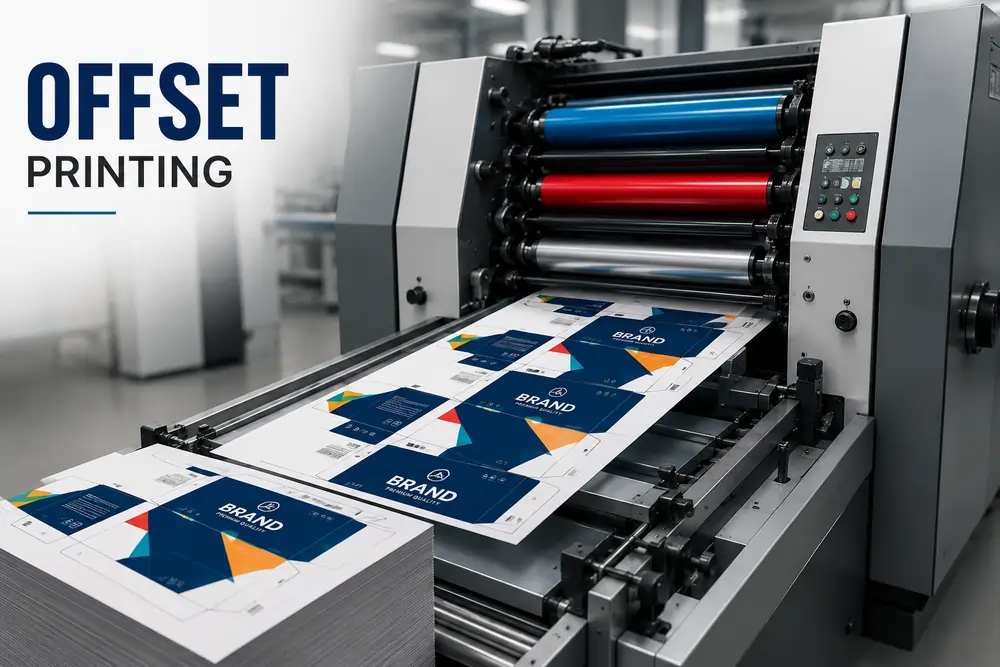
Offset uses metal plates, one per color, that transfer ink onto a rubber "blanket" first and then onto your box material. Setting those plates up costs real time and money before a single finished box exists. That upfront cost is basically the whole personality of offset printing. Expensive to start. Cheap once it's moving.
Where it shines
This is why big brands ordering thousands of units almost always default to offset. Spread that plate cost across 10,000 boxes and it barely shows up in the final number. Spread the same cost across 200 boxes and, well, you're basically paying for it twice.
Color quality is the other big win here, especially Pantone matching. If your brand has one very specific shade that has to look identical every single order, offset tends to nail it more reliably than the alternatives. Ever notice packaging that just looks richer, deeper, almost too saturated in a good way? Good chance it was offset.
Where it struggles
Turnaround is slower because of that plate-making step, and small runs just don't make financial sense. A startup ordering 300 units for a first test batch is going to feel the offset price tag hard, probably harder than it should.
Digital Printing
How it actually works
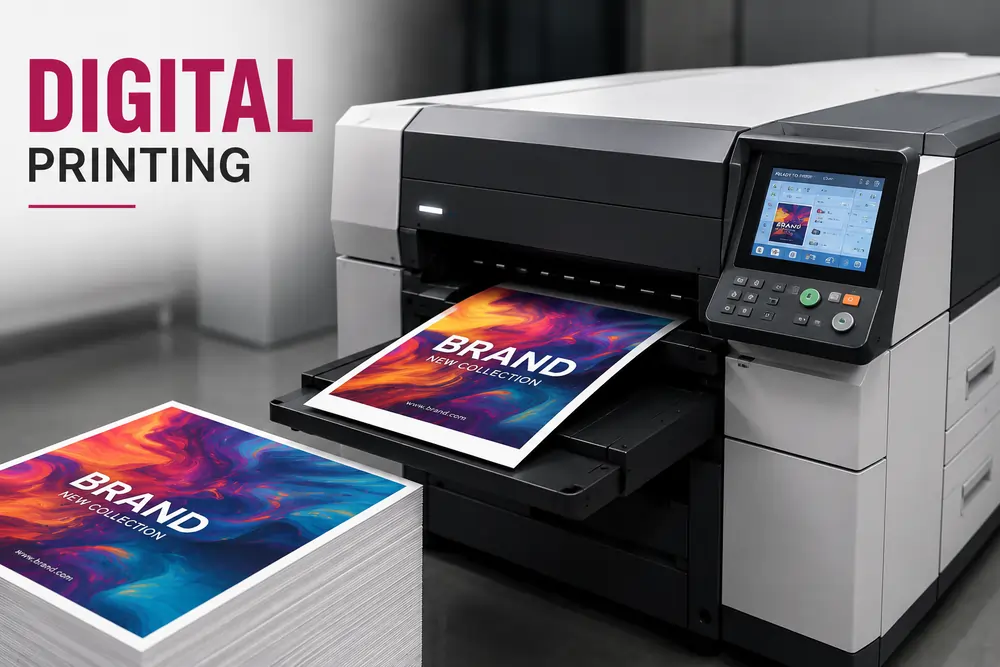
No plates at all. Digital printing works more like a seriously souped-up office printer, sending your design straight from a file onto the material. Skip the setup step entirely and the cost per unit barely moves whether you're printing 50 boxes or 500.
Where it shines
That flat, predictable pricing is exactly why smaller businesses, product launches, and anyone still testing a design lean on digital. Want to try three different box concepts before committing to one? Digital actually makes that affordable, since you're not paying separate setup fees three times over.
Speed's the other perk. Fewer production steps, quicker turnaround, which matters a lot if you've got a launch date breathing down your neck and no six weeks to spare.
Where it struggles
At scale, digital just doesn't get cheaper the way offset does. Somewhere past a certain volume it flips and becomes the pricier option. Color accuracy can also lag slightly behind offset for very exact Pantone matches, though honestly that gap has closed a lot over the past few years.
Screen Printing
How it actually works
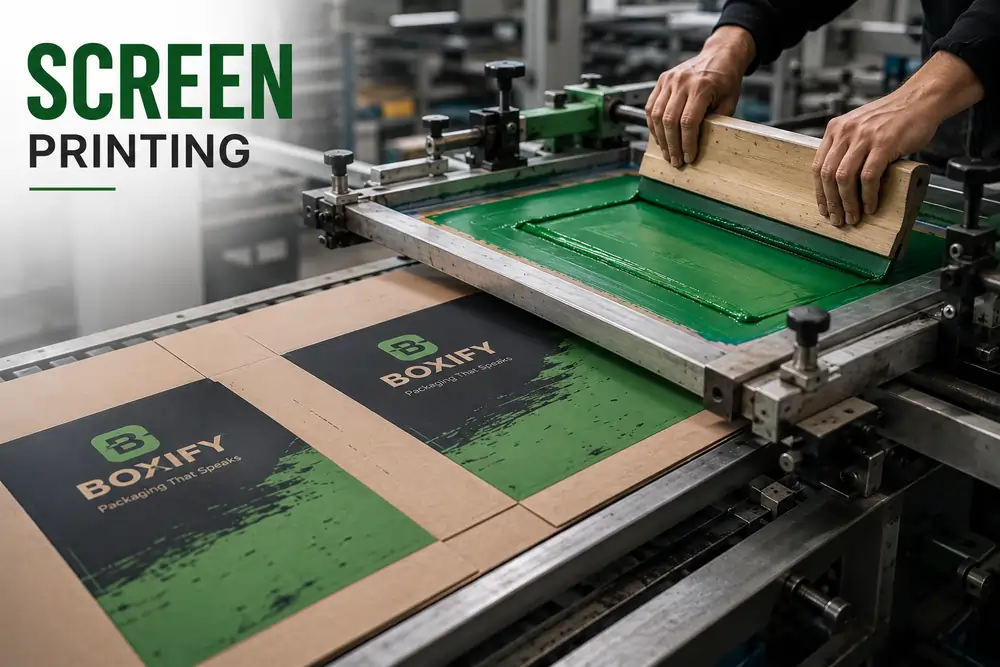
Screen printing is the odd one out. Less about full-color photography, more about bold, simple designs, a logo, a couple of solid colors, that kind of thing. Ink gets pushed through a mesh screen straight onto the surface, laying down a noticeably thicker, more durable coat than either offset or digital manage.
Where it shines
That thickness is the whole appeal. Screen printing holds up beautifully on rougher, textured surfaces, kraft paper especially, or fabric-based custom packaging, where offset and digital can sometimes look thin or a little patchy in comparison. Simple one or two-color logo going onto something textured? Screen printing usually wins, both in looks and how long it holds up.
Where it struggles
Detailed, full-color designs or photography just aren't its thing. Every color needs its own screen, so the more colors you throw in, the pricier and more complicated it gets. It's also not particularly quick for big volumes compared to offset, since each screen pass eats up real time.
So Which One Should You Actually Go With?
Really it comes down to two questions. How many units, and how complex is the design?
Under a thousand units and you want it done reasonably fast? Digital's the practical pick. Keeps upfront cost low, lets you tweak designs between orders without paying a penalty for changing your mind.
Thousands of units, maybe five figures? Offset starts pulling ahead. That setup cost stops mattering once it's divided across enough boxes, and you get better color precision if exact shade matching is a big deal for your brand.
Simple design, textured material like kraft? Screen printing might beat both, honestly, regardless of order size. That one's less about volume and more about the specific look and toughness you're after.
Plenty of businesses use more than one method as they grow. Small digital test batch to nail the design, then a bigger offset run once the math makes sense. Switching printing methods as your order size changes isn't weird. It's basically standard practice.
Quick Word on Cost Per Unit
Tempting to just ask "which one's cheapest" and leave it there, but cheapest depends entirely on quantity. At 200 units digital wins almost every time. At 20,000 units offset wins almost every time. Somewhere in between, usually the low thousands depending on your supplier, the two land close enough that it's worth just asking for quotes on both before deciding.
Bottom Line
None of these three is objectively "the best." They're built for different jobs, full stop. Offset rewards volume and color precision. Digital rewards flexibility and small runs. Screen printing rewards bold, simple designs on textured stock. Figure out where your order size and design actually land, and honestly, the right choice usually just becomes obvious.
Still not sure which one fits your project? Our team at Boxify Design can put together a quote for each method (get a free quote here) so you're comparing real numbers side by side before you order anything.