(312) 681 7194


 Apparel Boxes
 CBD Boxes
 Electronic Boxes
 Jewelry Boxes
 Christmas Boxes
 Soap Boxes
 Bottle Boxes
 Hardware Boxes
 Health Boxes
 Product Boxes
 Pharma Boxes
 Holiday Boxes
 Shipping Boxes
 Sports Boxes
 Pre Roll Boxes
 Pizza Boxes
 Vape Boxes
 Hemp Boxes
 Cereal Boxes
 Bakery Boxes
 Gift Boxes
 Stationery Boxes
 Chocolate Boxes
 Retail Boxes
 Candle Boxes
 Food Boxes
 Tea Packaging
 Cigarette Boxes
 Cosmetic Boxes
 Coffee Packaging
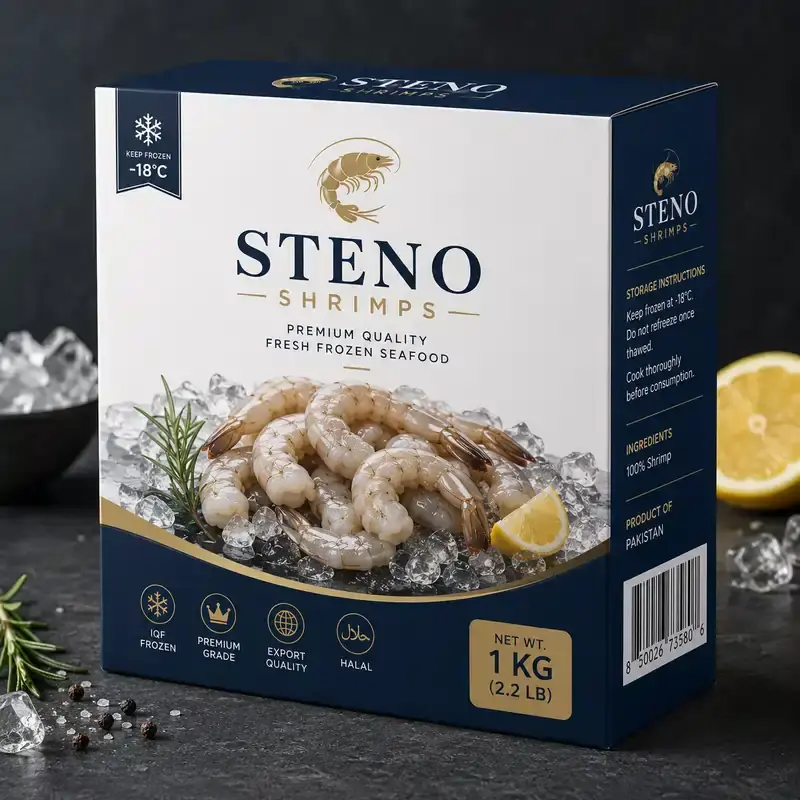
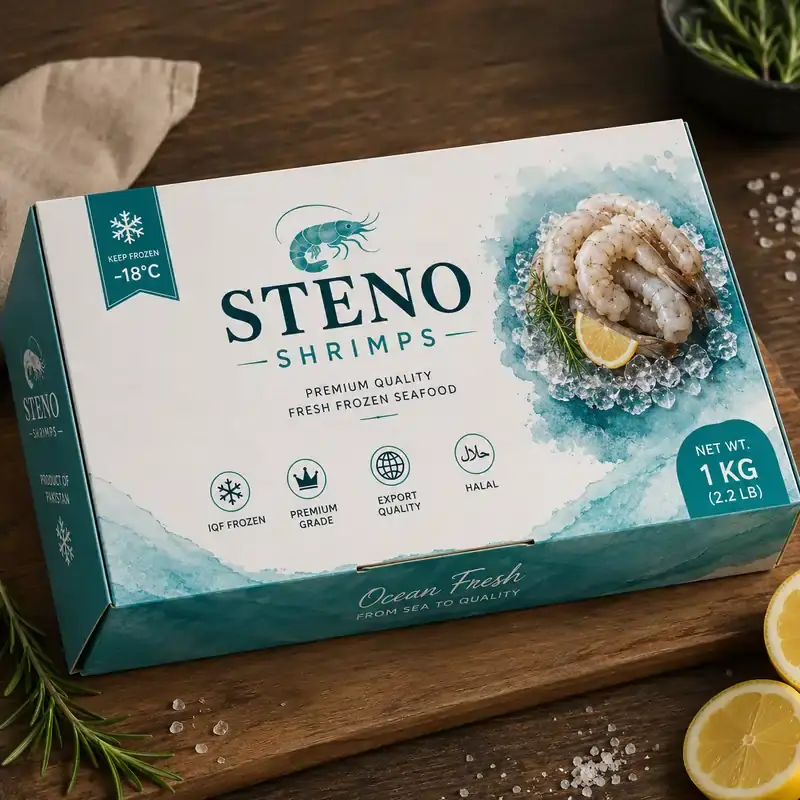
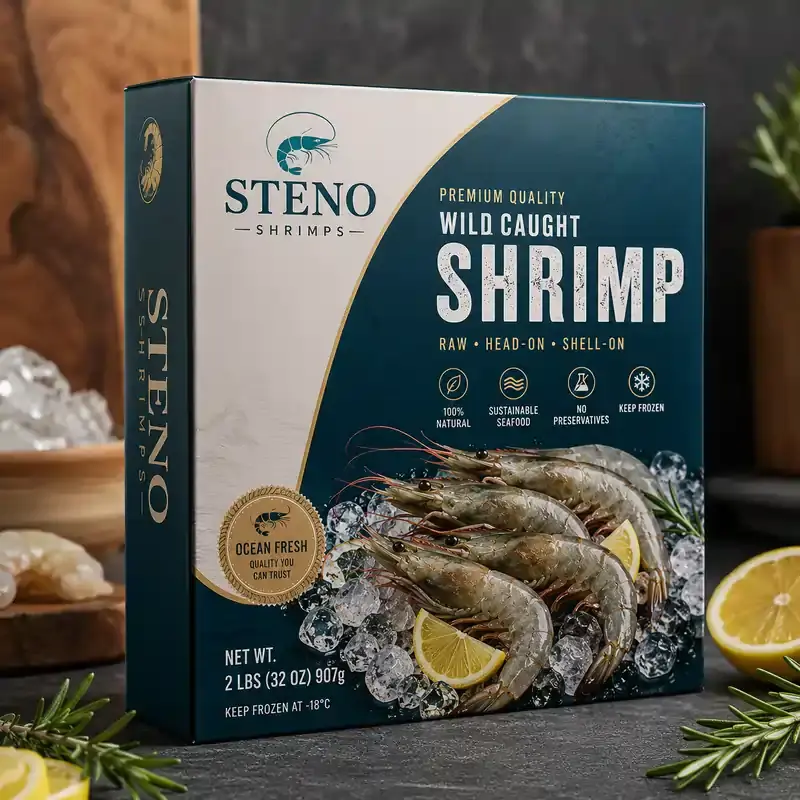
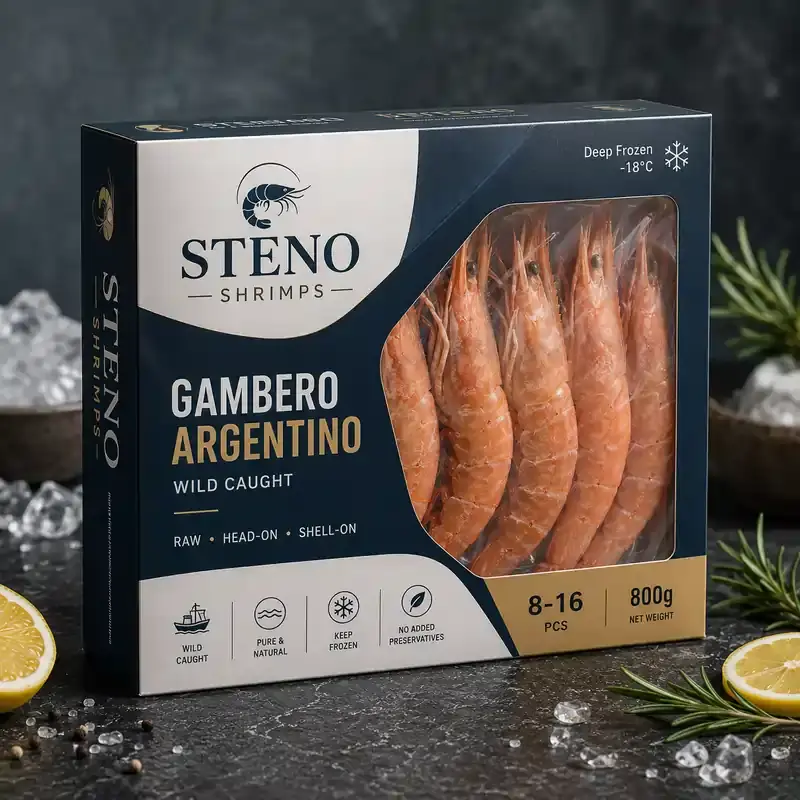
Most shrimp packaging feels like an afterthought, just a standard box with a shrimp label slapped on. We do it differently. Moisture resistance that actually holds up, cold chain protection down to 0°F for frozen product...

UK
 4.5
4.5
Date of experience
15 Oct, 2025
New York
5
Date of experience
15 Oct, 2025
New York
4.5
Date of experience
15 Oct, 2025
 No Minimum Order
 Free Custom Designing
 Best and Competitive Pricing
 No Die or Plate Charges
 7 Day Turnaround
 Free Shipping All Over USA
A restaurant plating shrimp the same day it arrives doesn't need the same box as a distributor shipping frozen cartons across three states, and neither of them needs what a meal-kit brand mailing overnight orders needs. Yet a lot of shrimp packaging gets sold as one-size-fits-all. It shouldn't be. The right box comes from how your product actually moves, not from a generic template.
Before picking a material or a finish, it helps to figure out which of these you actually are:
| Business Type | What the Box Needs to Do |
| Restaurants & food service | Move bulk product fast, protect freshness, skip the heavy branding |
| Grocery & retail | Look good on a shelf next to competitors, with clear labeling |
| Seafood distributors | Stack well, resist moisture, survive cold storage handling |
| Direct-to-consumer / meal kits | Keep things cold in transit and make a good first impression on opening |
Shrimp is unforgiving. It releases moisture as it thaws, it picks up smells from anything porous sitting near it, and it starts losing quality fast the moment temperature control slips even a little. A box that's fine for dry goods can fall apart, sometimes literally, when shrimp is what's inside. Cut a corner on material or fit and you're looking at a returned order or an unhappy customer within a day or two, not a slow decline you can catch in time.
This is one spot where a lot of packaging advice online gets sloppy, so it's worth stating plainly. Frozen shrimp needs to stay at 0°F (-18°C) or colder the entire way through storage and shipping. Fresh, unfrozen shrimp should sit between 32°F and 39°F (0°C to 4°C). If a box can't hold those ranges, whether that's down to insulation, gel packs, or just a properly sealed liner, it isn't doing its actual job, no matter how sharp the printing looks.
Whether it's a home cook picking shrimp off a grocery shelf or a restaurant manager signing for a delivery, people judge freshness on sight before they judge it on taste. A handful of things tend to move that needle:
| Material | Where It Earns Its Keep |
| Wax-coated corrugated | Best moisture resistance for frozen or thawing product |
| Food-grade kraft with a liner | Solid eco-friendly option with decent moisture protection |
| Rigid board | Premium look for retail or gift-style seafood packs |
| Insulated corrugated with foam liner | Holds up best for shipping fresh or live shrimp any real distance |
More buyers care about sustainability these days, but shrimp packaging is one of the trickier categories to make fully eco-friendly, since recyclability and moisture resistance tend to pull against each other. Recyclable kraft with a water-based, food-safe liner is about as close as you'll get to a real balance right now, better sustainability credentials than wax-coated stock, while still holding up decently for short-to-medium shipping windows. For fully frozen product going long distances, though, a wax-coated or foil-lined box still beats the fully recyclable options on protection. It really comes down to how far the product's traveling and how thawed it'll be by the time someone uses it.
Shrimp gets sold by weight far more often than by a fixed count, so sizing usually works backward from a target weight instead of a standard size chart. Common formats run 1 lb and 2 lb for retail, 5 lb for foodservice, and 10 lb or more for distributors moving bulk product. Custom sizing means the box actually fits the weight you're packing, which keeps the product from sliding around in transit and stops you from paying for cardboard you don't need.
| Product Style | Shrimp Boxes |
| Dimension (L + W + H) | All Custom Sizes and Shapes |
| Quantities | NO MOQ |
| Printing | Offest , Digital , Screen |
| Finishing | Gloss Lamination, Matte Lamination, Gloss AQ, Gloss UV, Matte UV, Spot UV, Embossing, Foiling |
| Included Options | Die Cutting, Gluing, Scored,Perforation |
| Additional Options | Eco-Friendly, Recycled Boxes, Biodegradable |
| Proof | Flat View, 3D Mock-up, Physical Sampling (On request) |
| Turnaround | 10 - 12 Business Days, RUSH |
| Shipping | Flat |

Foil stamping, sometimes called foil printing, is a method of applying colored foils to a surface for an elegant look.

The term "kraft" is German for "strength," reflecting the material's durability, which makes it ideal for shipping and protecting products, especially when used in its naturally brown or white forms.

Rigid stock is a premium, sturdy material used for custom boxes, created by combining a dense paperboard core (chipboard) with a smooth, high-quality paper or cardstock covering.

Corrugated is a strong, layered material composed of a wavy, inner fluted sheet sandwiched between two flat outer linerboards.

Foil stamping, sometimes called foil printing, is a method of applying colored foils to a surface for an elegant look. Much like embossing, foil stamping uses a combination of heat and pressure to stick foil to a printed substrate.

Spot UV is a method of applying a glossy, ultra-smooth finish to targeted areas of printed materials.

A glossy finish is a smooth, shiny surface that reflects light, giving a vibrant, high-shine appearance to the boxes.

Holographic foiling on custom boxes is a luxury packaging finish that applies a special foil to the box's surface to create a shimmering, multi-colored effect.

Embossing in packaging is a technique that involves creating raised designs on custom boxes, thereby adding texture and dimension to the packaging.

A metal plate is engraved with your custom design, heated, and pressed into the material to create promotional products with dimensional depth.

A matte finish on custom boxes is a non-reflective, smooth coating that gives a sophisticated and elegant look with a soft, velvety texture.

A finishing process for custom boxes where a thin, matte plastic film is applied to create a smooth, velvety, and luxurious feel.
Find answers to common questions about this product. Contact us if you need more help with your custom packaging order.


 Cardboard Boxes
 Corrugated Boxes
 Rigid Boxes
 Kraft Boxes
 Custom Tote Bag
 Custom Mylar Bags
 Hang Tags
 Labels & Stickers
 Mailer Boxes
 Paper Bags
 Trays and Sleeves
 Tube Packaging
 Tuck Boxes
 Display Boxes
 Window Packaging Boxes
 Gable Boxes
 Pillow Boxes